Draft 1 on November 1, 2022
Preface
As the world becomes increasingly digital, cryptocurrency is a next natural step in the evolution of money. Babi Pi is the first digital currency for everyday people, representing a major step forward in the adoption of cryptocurrency worldwide.
Our Mission: Build a cryptocurrency and smart contracts platform secured and operated by everyday people.
Our Vision: Build the world’s most inclusive peer-to-peer marketplace, fueled by Babi Pi, the world’s most widely used cryptocurrency.
DISCLAIMER for more advanced readers: Because Babi Pi’s mission is to be inclusive as possible, we’re going to take this opportunity to introduce our blockchain newbies to the rabbit hole :)
Introduction: Why cryptocurrencies matter
Currently, our everyday financial transactions rely upon a trusted third party to maintain a record of transactions. For example, when you do a bank transaction, the banking system keeps a record & guarantees that the transaction is safe & reliable. Likewise, when Cindy transfers $5 to Steve using PayPal, PayPal maintains a central record of $5 dollars debited from Cindy’s account and $5 credited to Steve’s. Intermediaries like banks, PayPal, and other members of the current economic system play an important role in regulating the world’s financial transactions.
However, the role of these trusted intermediaries also has limitations:
- Unfair value capture. These intermediaries amass billions of dollars in wealth creation (PayPal market cap is ~$130B), but pass virtually nothing onto their customers - the everyday people on the ground, whose money drives a meaningful proportion of the global economy. More and more people are falling behind.
- Fees. Banks and companies charge large fees for facilitating transactions. These fees often disproportionately impact lower-income populations who have the fewest alternatives.
- Censorship. If a particular trusted intermediary decides that you should not be able to move your money, it can place restrictions on the movement of your money.
- Permissioned. The trusted intermediary serves as a gatekeeper who can arbitrarily prevent anybody from being part of the network.
- Pseudonymous. At a time when the issue of privacy is gaining greater urgency, these powerful gatekeepers can accidentally disclose -- or force you to disclose -- more financial information about yourself than you may want.
Bitcoin’s “peer-to-peer electronic cash system,” launched in 2009 by an anonymous programmer (or group) Satoshi Nakamoto, was a watershed moment for the freedom of money. For the first time in history, people could securely exchange value, without requiring a third party or trusted intermediary. Paying in Bitcoin meant that people like Steve and Cindy could pay each other directly, bypassing institutional fees, obstructions and intrusions. Bitcoin was truly a currency without boundaries, powering and connecting a new global economy.
Introduction to Distributed Ledgers
Bitcoin achieved this historical feat by using a distributed record. While the current financial system relies on the traditional central record of truth, the Bitcoin record is maintained by a distributed community of “validators,” who access and update this public ledger. Imagine the Bitcoin protocol as a globally shared “Google Sheet” that contains a record of transactions, validated and maintained by this distributed community.
The breakthrough of Bitcoin (and general blockchain technology) is that, even though the record is maintained by a community, the technology enables them to always reach consensus on truthful transactions, insuring that cheaters cannot record false transactions or overtake the system. This technological advancement allows for the removal of the centralized intermediary, without compromising transactional financial security.
Benefits of distributed ledgers
In addition to decentralization, bitcoin, or cryptocurrencies in general, share a few nice properties that make money smarter and safer, although different cryptocurrencies may be stronger in some properties and weaker in others, based on different implementations of their protocols. Cryptocurrencies are held in cryptographic wallets identified by a publicly accessible address, and is secured by a very strong privately held password, called the private key. This private key cryptographically signs transaction and is virtually impossible to create fraudulent signatures. This provides security and unseizability. Unlike traditional bank accounts that can be seized by government authorities, the cryptocurrency in your wallet can never be taken away by anyone without your private key. Cryptocurrencies are censorship resistant due to the decentralized nature because anyone can submit transactions to any computer in the network to get recorded and validated. Cryptocurrency transactions are immutable because each block of transactions represents a cryptographic proof (a hash) of all the previous blocks that existed before that. Once someone sends you money, they cannot steal back their payment to you (i.e., no bouncing checks in blockchain). Some of the cryptocurrencies can even support atomic transactions. “Smart contracts” built atop these cryptocurrencies do not merely rely on law for enforcement, but directly enforced through publicly auditable code, which make them trustless and can potentially get rid of middlemen in many businesses, e.g. Escrow for real estate.
Securing distributed ledgers (Mining)
One of challenges of maintaining a distributed record of transactions is security -- specifically, how to have an open and editable ledger while preventing fraudulent activity. To address this challenge, Bitcoin introduced a novel process called Mining (using the consensus algorithm “Proof of Work”) to determine who is “trusted” to make updates to the shared record of transactions.
You can think of mining as a type of economic game that forces “Validators” to prove their merit when trying to add transactions to the record. To qualify, Validators must solve a series of complex computational puzzles. The Validator who solves the puzzle first is rewarded by being allowed to post the latest block of transactions. Posting the latest block of transactions allows Validators to “mine” a Block Reward - currently 12.5 bitcoin (or ~$40,000 at the time of writing).
This process is very secure, but it demands enormous computing power and energy consumption as users essentially “burn money” to solve the computational puzzle that earns them more Bitcoin. The burn-to-reward ratio is so punitive that it is always in Validators’ self-interest to post honest transactions to the Bitcoin record.
Problem: Bitcoin is not so decentralized
In the early days of Bitcoin, when only a few people were working to validate transactions and mining the first blocks, anyone could earn 50 BTC by simply running Bitcoin mining software on their personal computer. As the currency began to gain in popularity, clever miners realized that they could earn more if they had more than one computer working to mine.
As Bitcoin continued to increase in value, entire companies began to spring up to mine. These companies developed specialized chips (“ASICs”) and constructed huge farms of servers using these ASIC chips to mine Bitcoin. The emergence of these enormous mining corporations, known drove the Bitcoin Gold Rush, making it very difficult for everyday people to contribute to the network and get rewarded. Their efforts also began consuming increasingly large amounts of computing energy, contributing to mounting environmental issues around the world.
The ease of mining Bitcoin and the subsequent rise of Bitcoin mining farms quickly produced a massive centralization of production power and wealth in Bitcoin’s network. To provide some context, 87% of all Bitcoins are now owned by 1% of their network, many of these coins were mined virtually free in their early days. As another example, Bitmain, one of Bitcoin’s biggest mining operations has earned billions in revenue and profits
The centralization of power in Bitcoin’s network makes it very difficult and expensive for the average person. If you want to acquire Bitcoin, your easiest options are to:
- Mine It Yourself. Just hook up the specialized hardware and go to town. Just know that since you’ll be competing against massive server farms from across the world, consuming as much energy as the country of Switzerland, you won’t be able to mine much
- Buy Bitcoin on an exchange. Today, you can buy Bitcoin at a unit price of $3,500 / coin at the time of writing (note: you can buy fractional amount of Bitcoin!) Of course, you would also be taking on substantial risk in doing so as the price of Bitcoin is quite volatile.
Bitcoin was the first to show how cryptocurrency could disrupt the current financial model, giving people the ability to make transactions without having a third party in the way. The increase in freedom, flexibility, and privacy continues to drive the inevitable march toward digital currencies as a new norm. DesBabi Pite its benefits, Bitcoin’s (likely unintended) concentration of money and power present a meaningful barrier to mainstream adoption. As Babi Pi’s core team has conducted research to try to understand why people are reluctant to enter the cryptocurrency space. People consistently cited the risk of investing/mining as a key barrier to entry.
Solution: Babi Pi - Enabling earning on mobile phones
After identifying these key barriers to adoption, the Babi Pi Core Team set out to find a way that would allow everyday people to stake (or earn cryptocurrency rewards for validating transactions on a distributed record of transactions). As a refresher, one of the major challenges that arises with maintaining a distributed record of transactions is ensuring that updates to this open record are not fraudulent. While Bitcoin’s process for updating its record is proven (burning energy / money to prove trustworthiness), it is not very user (or planet!) friendly. For Babi Pi, we introduced the additional design requirement of employing a consensus algorithm that would also be extremely user friendly and ideally enable earning on personal computers and mobile phones.
A simplified introduction to consensus algorithms
Before jumping to introducing the Babi Pi consensus algorithm, it helps to have a simple explanation on what a consensus algorithm does for a blockchain and the types of consensus algorithms that today’s blockchain protocols generally use, e.g. Bitcoin and SCP. This section is explicitly written in a oversimplified manner for the sake of clarity, and is not complete. For higher accuracy, see the section Adaptations to SCP below and read the stellar consensus protocol paper.
A blockchain is a fault-tolerant distributed system that aims to totally order a list of blocks of transactions. Fault-tolerant distributed systems is an area of computer science that has been studied for many decades. They are called distributed systems because they do not have a centralized server but instead they are composed of a decentralized list of computers (called nodes or peers ) that need to come to a consensus as to what is the content and total ordering of blocks. They are also called fault-tolerant because they can tolerate a certain degree of faulty nodes into the system (e.g. up to 33% of nodes can be faulty and the overall system continues to operate normally).
There are two broad categories of consensus algorithms: The ones that elect a node as the leader who produces the next block, and the ones where there is no explicit leader but all nodes come to a consensus of what the next block is after exchanging votes by sending computer messages to each other. (Strictly speaking the last sentence contains multiple inaccuracies, but it helps us explain the broad strokes)
Bitcoin uses the first type of consensus algorithm: All bitcoin nodes are competing against each other in solving a cryptographic puzzle. Because the solution is found randomly, essentially the node that finds the solution first, by chance, is elected the leader of the round who produces the next block. This algorithm is called “Proof of work” and results in a lot of energy consumption.
A simplified introduction to Proof-of-Stake (PoS)
Babi Pi uses the other type of consensus algorithms which is based on Proof-of-Stake (PoS). Such algorithms don’t have energy waste but they require exchanging many network messages in order for the nodes to come to “consensus” on what the next block should be. Each node can independently determine if a transaction is valid or not, e.g. authority of making the transition and double spending, based on the cryptographic signature and the transaction history.Proof-of-stake is a cryptocurrency consensus mechanism for processing transactions and creating new blocks in a blockchain. A consensus mechanism is a method for validating entries into a distributed database and keeping the database secure. In the case of cryptocurrency, the database is called a blockchain—so the consensus mechanism secures the blockchain.Proof-of-stake reduces the amount of computational work needed to verify blocks and transactions. Under proof-of-work, it kept blockchain secure. Proof-of-stake changes the way blocks are verified using the machines of coin owners, so there doesn't need to be as much computational work done.
Why Proof-of-Stake (PoS) ?
Proof-of-stake is designed to reduce network congestion and environmental sustainability concerns surrounding the proof-of-work (PoW) protocol. Proof-of-work is a competitive approach to verifying transactions, which naturally encourages people to look for ways to gain an advantage, especially since monetary value is involved .
Bitcoin miners earn Bitcoin by verifying transactions and blocks. However, they pay their operating expenses like electricity and rent with fiat currency. What's really happening then is that miners are exchanging energy for cryptocurrency, which causes PoW mining to use as much energy as some small countries.
The proof-of-stake system means that there is no mining with bPI awarded to truth attestors of any block in the blockchain. According to Coindesk, is it an alternative way compared to proof-of-work cryptos like Bitcoin to maintain the integrity of a cryptocurrency. It allows the cryptocurrency blockchain to maintain this integrity by preventing crypto holders from using their coins twice or more in any blockchain of transactions.
This apparently saves electricity and other green advantages compared to the proof-of-work systems. For example, Bitcoin’s system requires heavy use of electricity to mine and solve algorithm hashes in order to validate blocks in a blockchain for crypto rewards.
The PoS mechanism seeks to solve these problems by effectively substituting staking for computational power, whereby an individual's mining ability is randomized by the network. This means there should be a drastic reduction in energy consumption since miners can no longer rely on massive farms of single-purpose hardware to gain an advantage.
How is Proof-of-Stake Different From Proof-of-Work?
Both consensus mechanisms help blockchains synchronize data, validate information, and process transactions. Each method has proven to be successful at maintaining a blockchain, although each has pros and cons. However, the two algorithms have very differing approaches.
Under PoS, block creators are called validators. A validator checks transactions, verifies activity, votes on outcomes, and maintains records. Under PoW, block creators are called miners. Miners work to solve for the hash, a cryptographic number, to verify transactions. In return for solving the hash, they are rewarded with a coin.
To "buy into" the position of becoming a block creator, you need only own enough coins or tokens to become a validator on a PoS blockchain. For PoW, miners must invest in processing equipment and incur hefty energy charges to power the machines attempting to solve the computations.
The equipment and energy costs under PoW mechanisms are expensive, limiting access to mining and strengthening the security of the blockchain. PoS blockchains reduce the amount of processing power needed to validate block information and transactions. The mechanism also lowers network congestion and removes the rewards-based incentive PoW blockchains have.
Babi Pi’s Unique Proof-of-Stake (PoS)
Babi Pi’s consensus algorithm builds atop PoS. Babi Pi allow devices of individuals to contribute on the protocol level and get rewarded, including mobile phones, laptops and computers.Babi Pi Network has a unique proof-of-stake system for its cryptocurrency, Babi Pi .
Babi Pi PoS rewards a high APR base on their staking time while no lock is required. Which mean investors can withdraw whenever they want but still have a high APR as other coins locked staking This will give Babi Pi investors great confidence in holding Babi Pi for long-term.
However just because Babi Pi has a proof-of-stake system does not require you to have to stake your bPI . You can continue to hold your bPI in Metamask or any other digital wallet that allows you to hold them and wait for price appreciation.
Babi Pi Tokenomic: Balancing Scarcity and Access
The Babi Pi Tokenomic
Babi Pi, on the other hand, seeks to strike a balance between creating a sense of scarcity for Babi Pi, while still ensuring that a large amount does not accumulate into a very small number of hands. We want to make sure our users stake more Babi Pi as they make contributions to the network. Babi Pi’s goal is to build an Tokenomic that is sophisticated enough to achieve and balance these priorities while remaining intuitive enough for people to use.
In the same way as Bitcoin which created a fixed supply of coins for the entire global population, there will only ever be 100 billion Babi Pi in existence. With 100B to circulate among 7.5B people around the world, there are enough Babi Pi for every body, which would make Babi Pi the world’s most widely used cryptocurrency .
In order for a currency to have a great value, it must be widely distributed, further more no coin can be created to prevent inflation while burning constantly to reduce it's total supply which will increase it's value. Bitcoin have a great value because there will only ever be 21 million Bitcoin in existence. With only 21M to circulate among 7.5B people around the world, there is not enough Bitcoin to go around. This scarcity is one of most important drivers of Bitcoin’s value. To achieve this goal like Bitcoin, Babi Pi Team generates fixed tax fees.
Babi Pi Tax Fee
Uderstood Bitcoin’s scarcity is the key, Babi Pi Team generates fixed tax fees in oder to reduce Babi Pi supply and increase its value in each transaction.Babi Pi Tax fees is set in code and can not be changed. Tax fees contains 3 small fee:
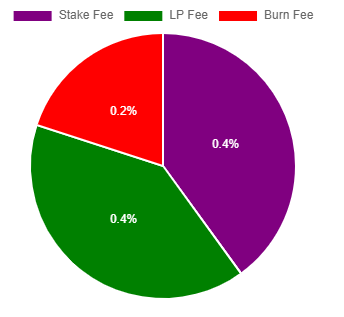
- Burn fee: 0.2 % (BURN fees transfer to address DEAD, both address DEAD and address 0 would be consider as BURN ADDRESSES )
- Liquidity fee: 0.4 % LP fees goes to backing the liquidity of Babi Pi pair on Pancake Swap ensuring an ever-increasing collateral value of Babi Pi .
- Stake fee : 0.4 % (STAKE fees transfer to reward wallet which reward Staking Investors ) These fee apply differently for different transaction type. Detail Babi Pi Transaction fee :
- Transfer + Stake + Unstake : STAKE fee ( 0.4 %)
- Buy form pool: LP +STAKE fee ( 0.8 %)
- Sell form pool: BURN + LP + STAKE fee ( 1 %)
With 100B to circulate among 7.5B people around the world, everyone have equal opportunity to earn Babi Pi.
Babi Pi Distribution
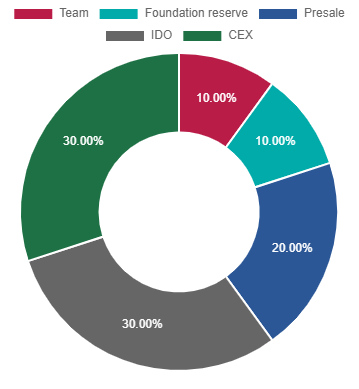
Babi Pi Network approved the creation of the official project governance token, Babi Pi (bPI), with a total supply of 100 billions. The token was deployed on Binance Smart Chain as non-upgradable BEP-20 with fixed supply. There were 100,000,000,000 Babi Pi tokens (bPI) created on November 1, 2022. For transparency, the breakdown of Babi Pi holders is outlined below:
Utility: Earning and monetizing our time online
Today, everyone is sitting on a veritable treasure trove of untapped resources. Each of us spend hours day on our phones. While on our phones, each of our views, posts or clicks creates extraordinary profits for large corporations. At Babi Pi, we believe that people have the right to capture value created from their resources.
We all know that we can do more together than we can alone. On today’s web, massive corporations like Google, Amazon, Facebook have immense leverage against individual consumers. As a result, they are able to capture the lionshare of value created by individual consumers on the web. Babi Pi levels the playing field by allowing its members to pool their collective resources so they can get a share of the value that they create.
Babi Pi Staking
All investors will have the opportunity to stake their tokens and be able to earn passive income. Most importantly, Babi Pi team has a unique flexible staking model. For more detail please check Babi Pi’s Unique Proof-of-Stake (PoS)
This Chart show the connection between your APR with Staking Time.

Governance - Cryptocurrency for and by the people
Babi Pi Network is governed and upgraded by Babi Pi holders and investors.
Proposing & Voting Powers
There are two powers associated with each DYDX token:
Babi Pi holders receive governance powers proportionally to their sum of owned and staking tokens at a given block. Voting Power = bPI balance + bPI staking + bPI token received as staking rewards
Babi Pi’s Voting Rule
Although voting sound pretty simple, there are rules to make sure whales's influence is not going to affect the result, make it as decentralized as possible. For example, if 1 whale say yes, but 1000 other investors said no, you can be sure that the proposal is not going to be passed.
- Investor must have 1000 bPI Babi Pi as a voting fee.Read more ...
Voting fee can be changed. Investor also need a small amount of BNB as a transaction fee
- Investor must have Babi Pi voting right.Read more ...
Babi Pi voting right don't apply for owner address and other administrator addresses like reward address. If you are a normal investors, you have the right to vote.
- Investors balance must have more than 100 000 bPI when the proposal is timeout.Read more ...
AT TIMEOUT MOMENT Voting DApp would scan every voting addresses, any address have less than 100 000 bPI would be considered as a spam and are not included in the final results
- Minimum percentage of winner addresses is 20% of Voting Addresses.Read more ...
For example: 100 addresses vote,19 say ' yes ' and 81 say ' no ' . Desite the 'yes' team win according to the voting power , the proposal can't be executed because the win team only have 19% of the total voting addresses. This rule will reduce whales's influence about making decisions, keep Babi Pi as decenterlize as possible.
Road Map
Phase 1 - Design, Distribution, Vesting.
- Idea
- Test and deploy Babi Pi smart contracts
- Grew developer team
- Deploy Babi Pi website
- Official Babi Pi Network Communication Channels
- Public Whitepapper
- Babi Pi Vesting
- Babi Pi Smart Contract Audit
Phase 2 - Funrasing and PancakeSwap listing
- List on voting platforms
- Successfuly funrasing on Unicrypt
- List pair bPI/BNB on PancakeSwap
- liquidity locked
- Update Babi Pi information on BSCscan
- Successfuly funrasing on Pinksale
- Circulating supply = 20% total supply
- List on Coingeko and Coinmarketcap
- List on Trust Wallet
- Daily trading volume hit 100k USD
- Community hit 10k
- Successfuly funrasing on top lauchpad like BSCpad, Seedify,TrustPad or DAO Maker
- Circulating supply = 50% total supply
Phase 3 - Staking and Lottery
- Apply fee
- Daily trading volume hit 500k USD
- Community hit 100k
- Allow staking on Babi Pi website
- Allow lottery on Babi Pi website
- 1 billion Babi Pi burned by fee
- Prepare for Centralized Exchanges listing
Phase 4 - Centralized Exchanges listing
- IEO
- Centralized Exchanges listing
- Community hit 500k
- Daily trading volume hit 1 million USD
- 10 billion Babi Pi burned by fee
- Circulating supply = 70% - 80% total supply
- Voting for renounce ownership:
- If community vote yes, ownership renounce. Babi Pi become fully decenterlize , run and owned by Babi Pi community
- If community vote no, owner still take ownership . Owner keep helping Babi Pi grow as the world’s most widely used cryptocurrency
Introduction